

Traffic Distribution Metrics show you how evenly your Knowledge Base traffic is spread across your articles and categories. Think of it like checking whether your content library is a balanced diet or if everyone's just binge-eating the same few articles 🍕
You'll find them under Traffic Distribution Analysis in Stats. Head to Content and then the Health subtab.
What Traffic Concentration Means
Traffic concentration measures how focused or spread out your visitor activity is. When traffic is highly concentrated, most of your views come from just a handful of articles. When it's well-distributed, visitors are engaging with a broader range of your content.
Stats shows what share of your article views went to your Top Article, Top 3 Articles, Top 5 Articles, and Top 10 Articles, then sums it up with one of these labels:
Label | When you'll see it |
Highly Concentrated | Your top article gets more than 25% of your views |
Concentrated | Your top 10 articles get more than 80% of your views |
Balanced Distribution | Your top 10 articles get between 40% and 80% of your views |
Well-Distributed | Your top 10 articles get less than 40% of your views |
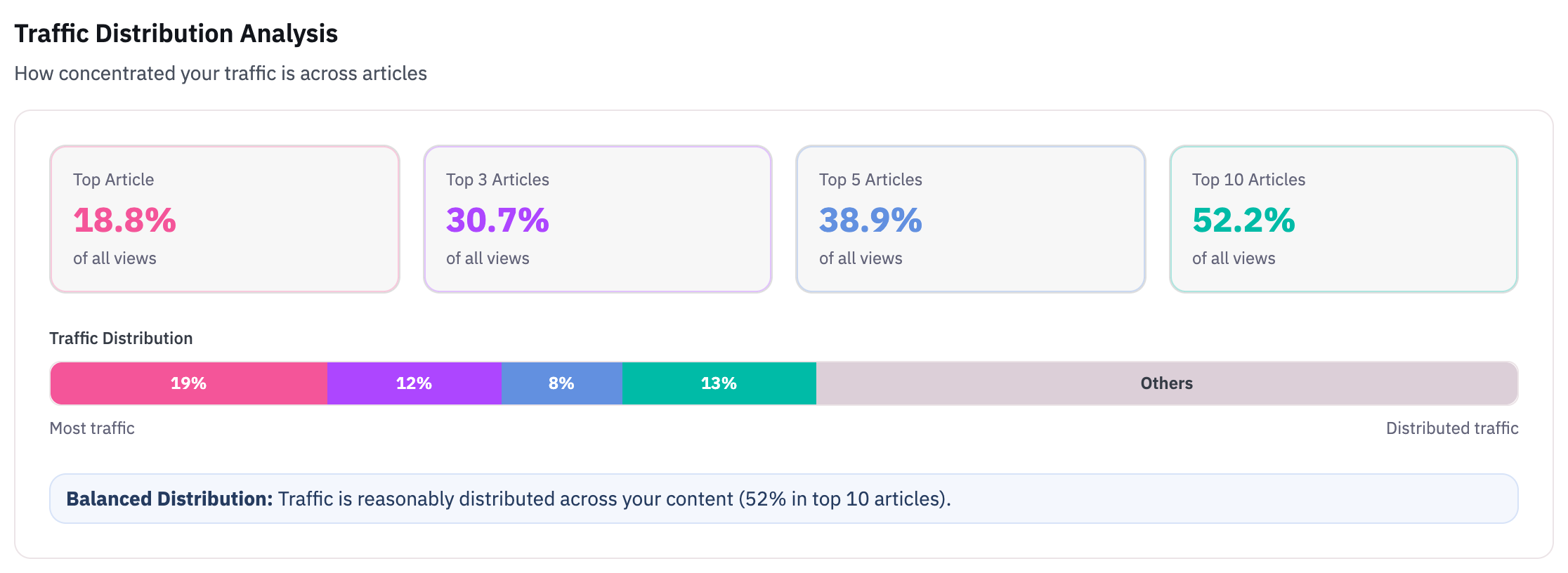
Why Distributed Traffic is Healthy
The more distributed your content traffic, the better it usually is for your Knowledge Base. Here's why:
- Diverse user needs: Different articles getting traffic means you're covering a wide range of customer questions and problems
- Comprehensive coverage: It shows your content library addresses various aspects of your product or service
- Reduced bottlenecks: Users aren't all funneling through the same few pieces of content
- Better user experience: Customers can find specific answers to their unique situations
Viewing Your Traffic Distribution Details
To get a deeper look at how your traffic is distributed, check out the tables underneath your main metrics. Each one has an Export button if you want the data in a spreadsheet. These show you:
Top Articles
This table ranks your individual articles by view count, helping you identify:
- Your most popular content pieces
- Articles that might need updates due to high traffic
- Content gaps if certain topics dominate your views
Any article getting more than 5% of your total views is flagged as a high traffic article.
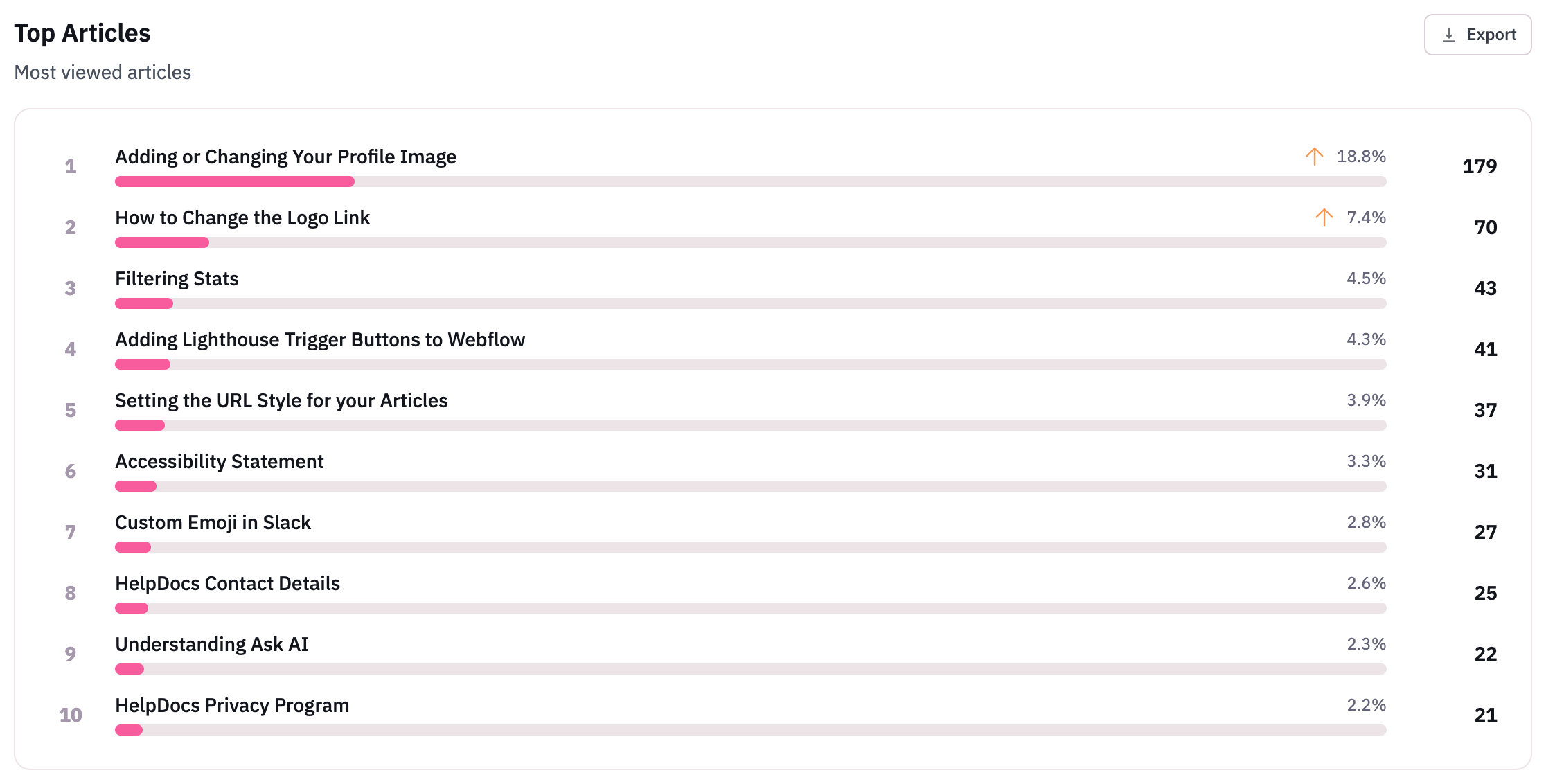
Top Categories
This shows which categories attract the most visitors, giving you insight into:
- The topic areas your customers care about most
- Categories that might benefit from more content
- Overall content strategy direction
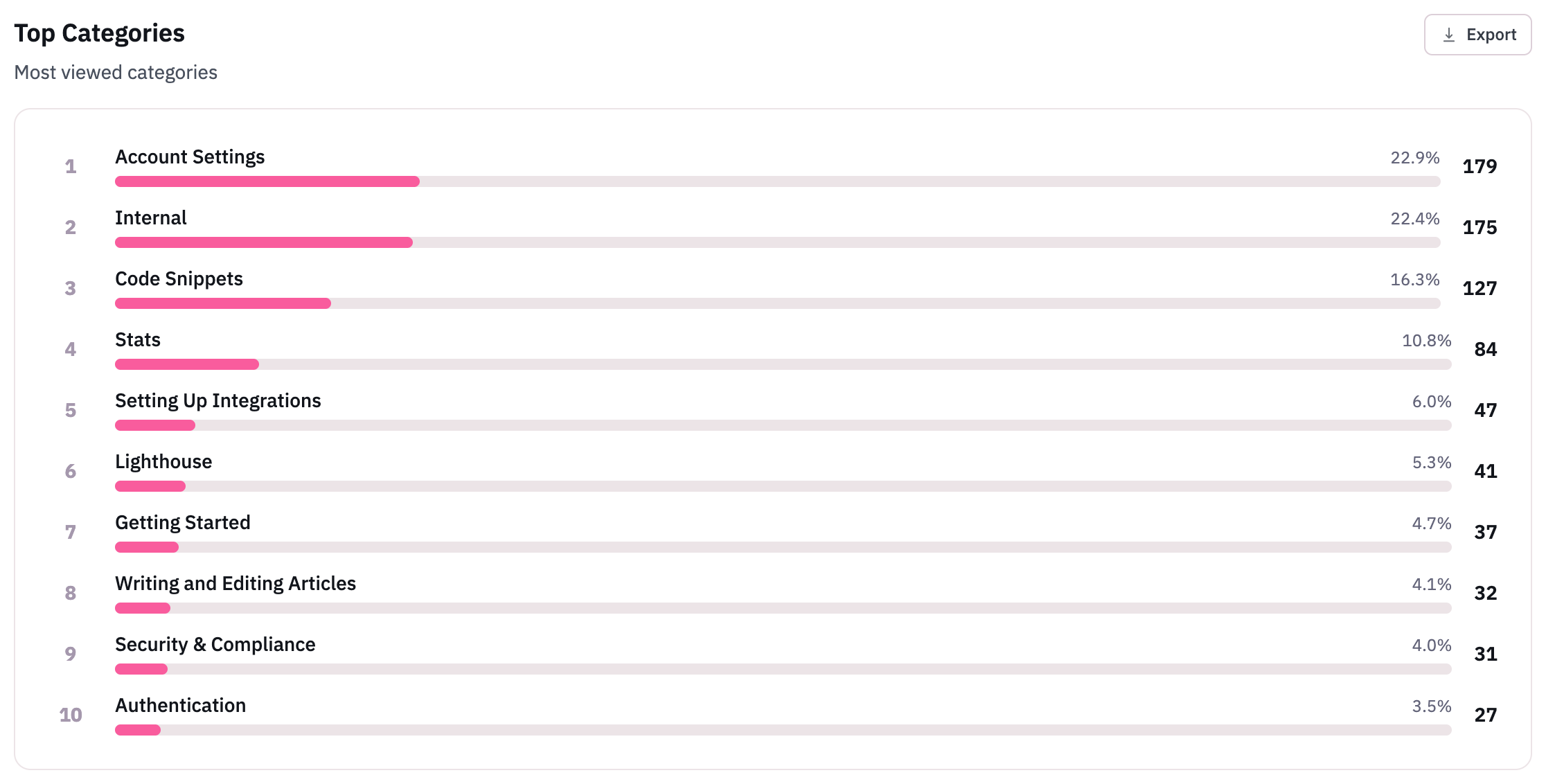
Understanding these metrics helps you make informed decisions about content creation, updates, and organization. If you notice traffic is too concentrated, consider promoting lesser-viewed but valuable content or creating more diverse content to better serve your users' needs.